

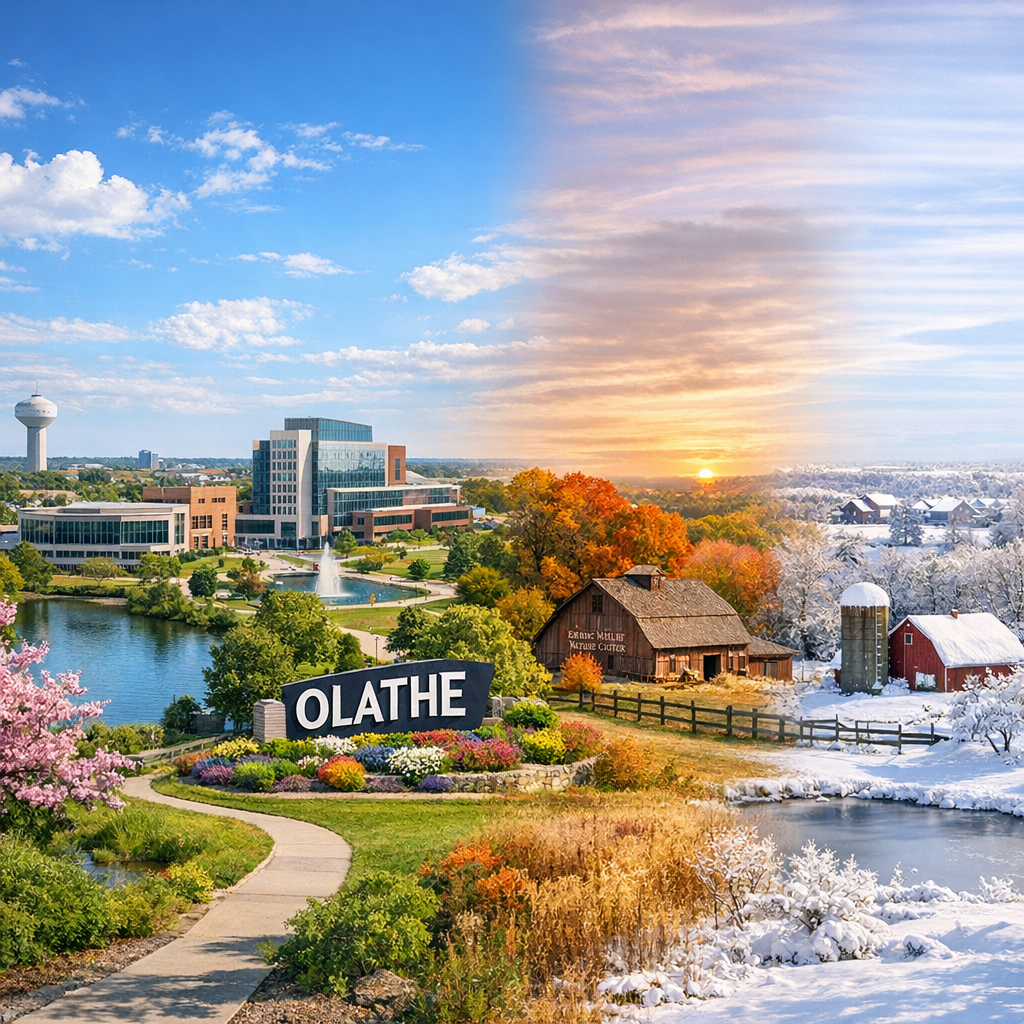
Olathe, Kansas, experiences a diverse climate characterized by hot, humid summers and cold, snowy winters. Understanding these patterns can help residents and visitors prepare for the varying conditions throughout the year.
Seasonal Temperature Variations
In Olathe, temperatures fluctuate significantly between seasons. During the summer months, particularly from late May to mid-September, average high temperatures exceed 79°F, with July being the warmest month, averaging a high of 89°F and a low of 70°F. Conversely, the winter season, spanning from late November to late February, sees average daily high temperatures below 49°F, with January being the coldest month, averaging a high of 40°F and a low of 22°F.
Precipitation and Snowfall
Olathe receives approximately 40 inches of precipitation annually, with May and June being the wettest months. The city averages about 19 inches of snowfall each winter, predominantly between December and February.
Environmental Initiatives
The Olathe Chamber of Commerce has initiated an Environmental Sustainability program to encourage businesses to adopt green practices. This includes events like “Olathe Celebrates Earth Day,” which offers residents opportunities to recycle e-waste, shred documents, and participate in other eco-friendly activities.
Additionally, the city leads Kansas in the number of LEED-certified buildings, with the Municipal Services building being the first municipal structure in the state to receive such certification. Efforts to improve air quality include using cleaner fuels in city vehicles, incorporating hybrid electric vehicles, and retrofitting older diesel engines.
Water Quality
Olathe’s tap water meets EPA standards, with no contaminants exceeding 50% of the established limits. However, there is currently one unresolved EPA violation for the city’s water system.
Understanding Olathe’s climate and environmental initiatives is essential for residents and visitors to make informed decisions and contribute to the community’s sustainability efforts.